Jane Austen
Graphic Novels of Jane Austen
Books, adaptations, and guides.
October 3, 2026 · 3 min read
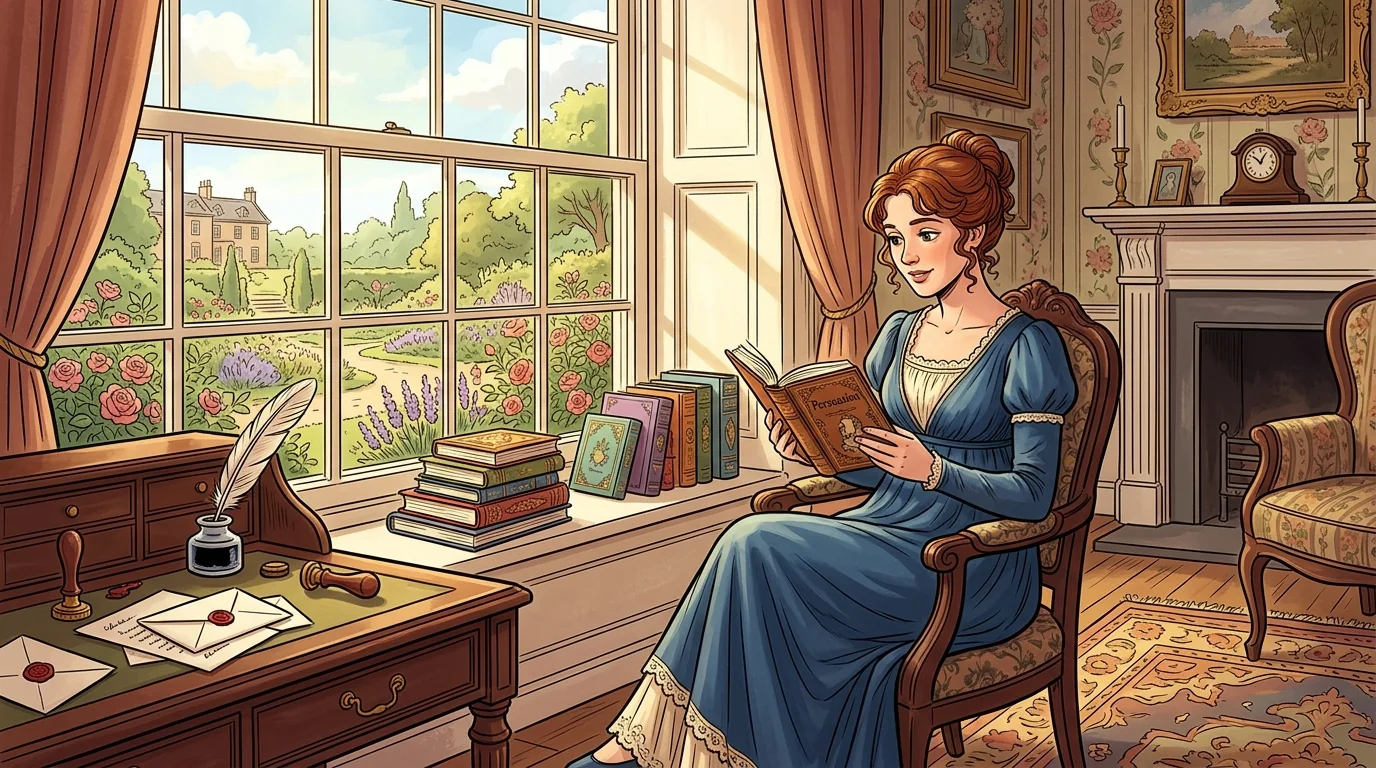
Jane Austen finished six novels, and every one of them is built on scenes: a ballroom where two people misread each other, a drawing room full of polite tension, a letter that changes everything. That is exactly what makes her such a good fit for graphic novels. A panel can show the glance across the room that Austen describes in a single dry sentence.
This guide covers where to start, what an illustrated edition adds, and our graphic novels of all six of her novels.
Why read Austen as a graphic novel?
Austen's language is a pleasure, but for many readers — especially younger readers, or anyone reading in a second language — the long sentences and Regency manners can be a wall. A good adaptation keeps her plot and her humor while letting the pictures carry the setting: the clothes, the carriages, the size of Pemberley. Once readers know the story and the people, many go back to the novel and find it far easier to enjoy.
It works the other way too. If you already love the books, an illustrated edition is a new way to spend time with characters you know well.
Where to start
Start with Pride and Prejudice. It is Austen's most famous novel for good reason: the plot moves quickly, the dialogue is sharp, and Elizabeth Bennet is one of the most likable heroines in English fiction.
Then read Emma. It is gentler and funnier, and it rewards readers who enjoy watching a confident character get things wrong. Emma Woodhouse is sure she understands everyone in her village; the fun is in seeing how far off she is.
Where to go next
For a story about sisters, read Sense and Sensibility. Elinor keeps her feelings to herself; Marianne shows hers to everyone. It was Austen's first published novel, and it's a lovely companion to Pride and Prejudice.
For something playful, read Northanger Abbey. Catherine Morland has read too many spooky novels and is sure her friends' family abbey hides a dark secret. It's Austen poking fun at gothic thrillers — and the best choice for younger readers who like a little mystery.
For a quieter, deeper story, read Mansfield Park. Shy Fanny Price grows up in her rich relatives' grand house and turns out to see more clearly than anyone around her.
For the most romantic, finish with Persuasion. Eight years after being talked out of marrying Captain Wentworth, Anne Elliot meets him again. Many readers' favorite — and the best one to save for last.
Austen's six novels, in publication order
- Sense and Sensibility (1811)
- Pride and Prejudice (1813)
- Mansfield Park (1814)
- Emma (1815)
- Northanger Abbey (published after her death, with Persuasion)
- Persuasion
You don't need to read them in order — each stands alone — but Pride and Prejudice and Emma are the friendliest first steps.
What to look for in an Austen adaptation
- The dialogue. Austen's characters reveal themselves in what they say. A good adaptation keeps as much of the original conversation as the page allows.
- Faces. So much happens in a look. The art should make it clear what each character is thinking even when they're being perfectly polite.
- Pacing. The big moments — the first proposal, the letter, the visit to Pemberley — need room to breathe across a page or a spread.
All six are available as full-color graphic novels — see them together on our books page.
As an Amazon Associate we earn from qualifying purchases.